A practical 2026 guide to clearing ESI dues, verifying ESIC registration and addressing statutory liabilities before applying for company strike-off in India.
Quick answer: Prior to applying for voluntary strike-off under s.248(2) of the Companies Act, 2013 you must clear all ESI contributions, returns, notices and employee claims up to the last working day. The directors certify nil liabilities via STK-3, STK-4 and STK-8 and their liability continues on dissolution. The ESIC code is closed via ESIC (usually after verification) and cannot just be deleted.
Why Does ESI Compliance Matter Before Filing STK-2?
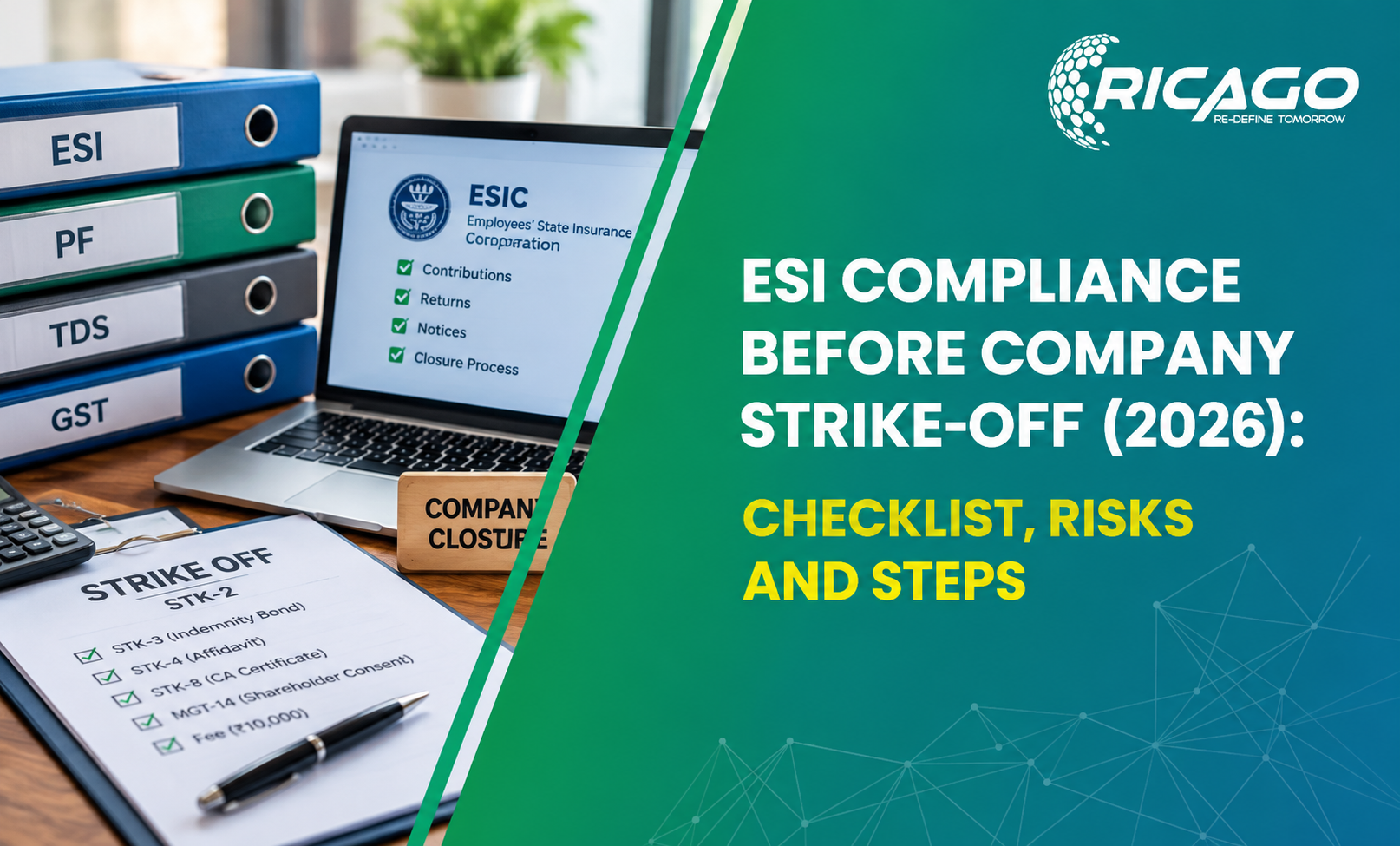
Voluntary strike-off via Form STK-2 requires a package of declarations. Each director has to sign a notarised indemnity bond (STK-3) and an affidavit (STK-4). A practising CA has to certify the statement of accounts (STK-8) which must show nil assets and nil liabilities and be no more than 30 days old. You also require 75% shareholder consent (filed via MGT-14) and the ₹10,000 fee.
Unpaid ESI is a liability. If there are arrears then those declarations are false and the exposure is with the people who have signed them.
What Should Be on Your Pre-Strike-Off ESI Checklist?
Do this prior to the 30 day window on STK-8 commencing so that the accounts aren't stale by the time the ESI position is clean.
What Happens to Your ESIC Code After Company Strike-Off?
ESIC doesn't allow you to cancel a registration at the click of a button. It has to be done via ESIC and the regional office can inspect the records before they approve it. Practitioners will often complete it following the striking off notice, but will tend to do it as early as possible as open contributions can delay the closure.
One special case: if you were assigned an ESIC code at the time of incorporation but never had any employees covered by it, check with your regional office and your advisor to confirm your position and maintain your payroll and nil employee records.
Can Directors Still Be Liable After Company Dissolution?
Under s.248(7) of the Companies Act the liability of the directors, officers and members continues as if the company had not been dissolved. The most serious ESI default is the deduction of employee contributions from wages which are never actually deposited. The ESI Act, 1948 provided for a maximum imprisonment of 2 years in respect of such defaults and ESI is now governed by the Code on Social Security, 2020 which came into force on 21 November 2025. Confirm the relevant provisions with counsel, but treat it as a personal risk.
Common mistakes
How Can Ricago Help Ensure a Smoother Company Strike-Off?
Ricago don't file your STK-2. Your Company Secretary or your CA does that. What Ricago provide them with is a verified, evidenced ESI position.
Ricago’s Compliance Management System offers:
Planning a closure or not quite sure what your ESI position actually is? Book a free Ricago demo and have all your statutory obligations in one dashboard.
FAQs
Can I file the STK-2 with pending ESI dues?
The portal may accept it, your no liability declarations would be wrong though. Clear your dues first.
Can the ESIC code be cancelled prior to strike off?
It's closed via ESIC (normally after verification) rather than being deleted immediately.
Who is responsible after a company is struck off?
Directors under s248(7) and the indemnity bond they executed.
Do I need to clear the PF as well?
Yes. PF, GST and TDS dues also break a nil liability position.